Curriculum
Customer Service Strategies for Logistics Professionals
Module 1: Introduction to Customer Service
0/3

Module 2: Mastering Communication & Professionalism
0/3

Module 3: Speed & Responsiveness in Customer Service
0/3
Module 4: Managing Customer Interactions & Problem-Solving
0/3
Module 5: Accuracy & Attention to Detail
0/3
Module 6: Building Long-Term Customer Relationships
0/4
Module 7: Leveraging Technology & Tools for Efficiency
0/2
Module 8: Growing Your Career in Customer Service
0/3
Case Studies
0/2
Text lesson
Role of CSRs in Logistics Operations
Customer Service Representatives (CSRs) are the bridge that connects key players in logistics, ensuring seamless coordination between customers, carriers, and warehouses. A single miscommunication can cause shipment delays and lead to costly errors.
Key Responsibilities and Daily Tasks
CSRs handle a variety of tasks that directly impact service quality. Specific responsibilities may vary by company, with some roles requiring additional duties or a more focused scope based on business needs.
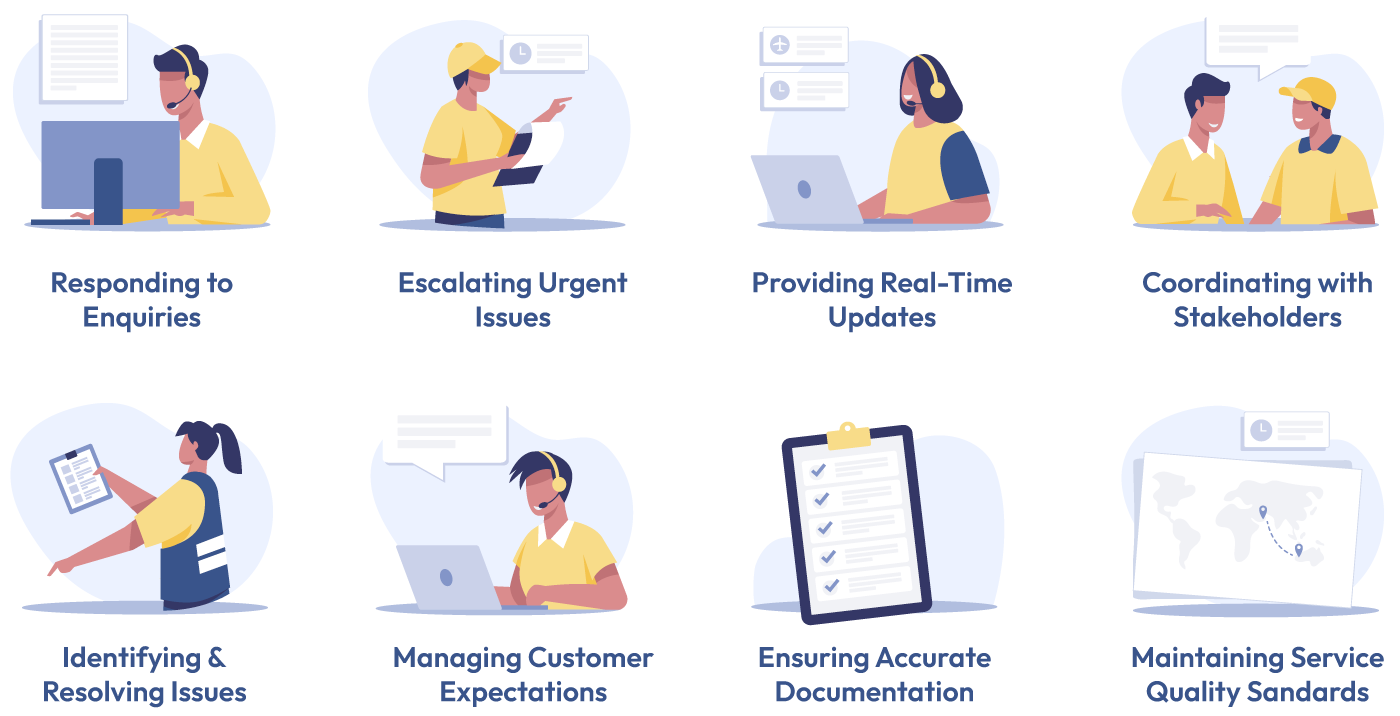
- Responding to Inquiries: Handling customer questions and concerns via phone, email, and live chat to provide timely assistance.
- Escalating Urgent Issues: Quickly addressing critical situations, such as delays in essential medical supply shipments, to minimize disruptions.
- Providing Real-Time Updates: Keeping customers informed about shipment status, delays, and any potential disruptions.
- Coordinating with Stakeholders: Working with carriers, warehouses, and suppliers to adjust routes or schedules when issues arise.
- Identifying and Resolving Issues: Troubleshooting issues before they escalate, reducing delays and customer frustration.
- Managing Customer Expectations: Setting realistic delivery timelines and proactively communicating changes.
- Ensuring Accurate Documentation: Verifying shipment details, customs paperwork, and billing information to prevent costly errors.
- Maintaining Service Quality Standards: Ensuring compliance with company policies, industry regulations, and best practices.
In essence, a CSR isn’t just answering questions—they’re ensuring supply chains stay on track and businesses thrive.
Example: A customer calls about a missing shipment. Instead of just passing the inquiry to dispatch, an effective CSR checks tracking systems, contacts the carrier, and offers a solution—minimizing downtime for the customer.